
Google Willow Cuts Quantum Errors 40x: The 20-Year Magic State Crisis Ends
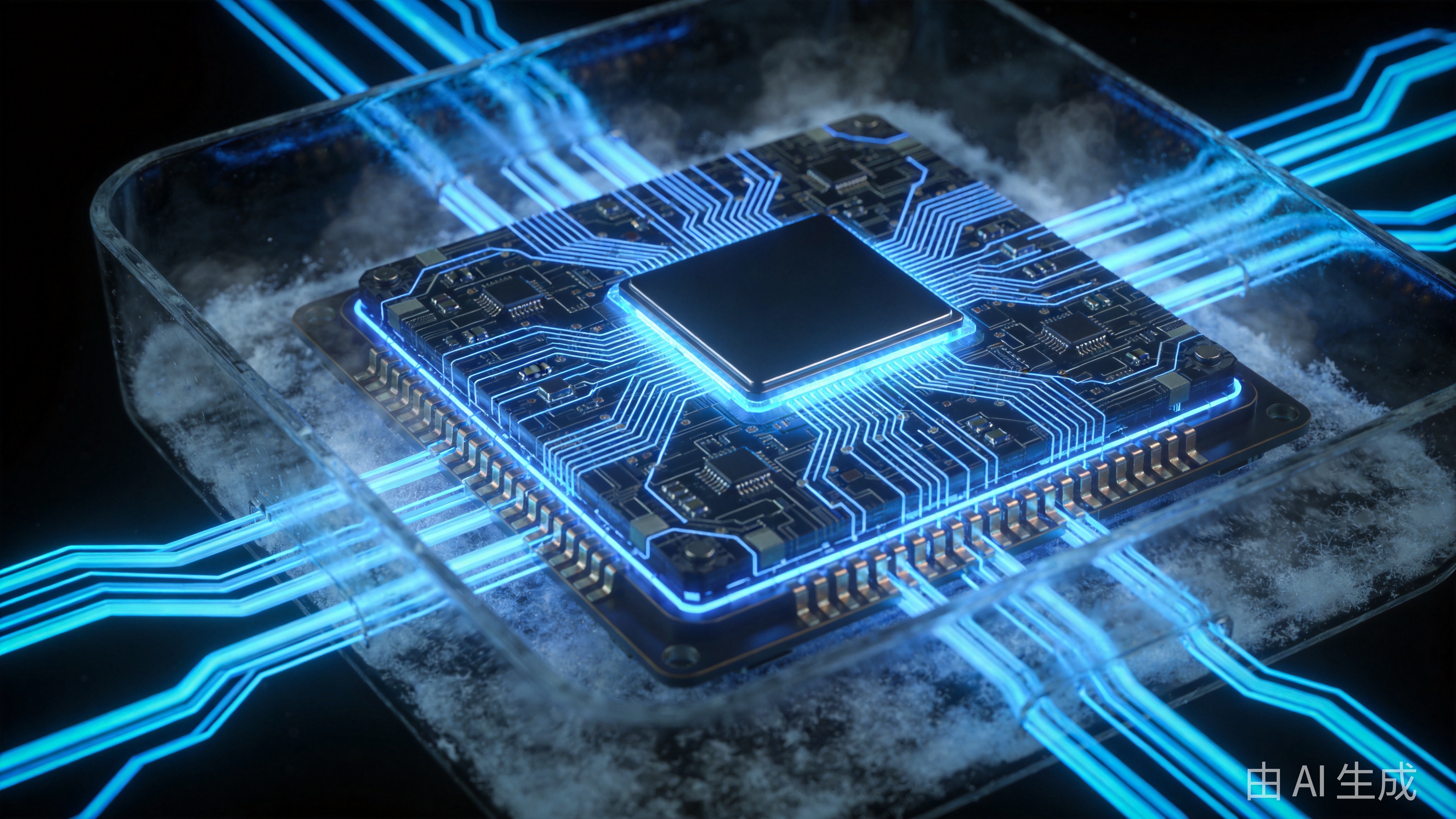
Google's Willow quantum chip achieves 99.99% fidelity with magic state cultivation, slashing error rates 40-fold and publishing results in Science.
A 20-Year Roadblock Falls
On October 15, 2026, Google Quantum AI announced a landmark result in the journal Science: its Willow superconducting quantum processor achieved magic state cultivation, reducing magic-state preparation errors by approximately 40 times and reaching a logical fidelity of 99.99%. The breakthrough addresses a problem that has constrained practical quantum computing for two decades.
Magic states are essential resources for fault-tolerant quantum computing, enabling the universal gate sets required for complex algorithms. Since the 1990s, physicists have relied on magic state distillation, a process so resource-intensive that it consumes 90% to 95% of a quantum computer's physical qubits. A machine built to solve industrial-scale problems would spend nearly all its hardware manufacturing fuel for its own operations rather than performing useful computation.
From Distillation Factory to Cultivation Greenhouse
Google's team, led by research scientist Emma Rosenfeld, replaced the distillation paradigm with a radically lighter protocol called magic state cultivation. The concept was first proposed theoretically in 2024. Instead of using 15 or more noisy raw magic states to distill one usable state through complex logical networks, cultivation starts with a single imperfect initial state in a compact color-code error-correction architecture.
The protocol subjects this "seed" to coordinated dual-verification loops that probe the encoded state's mathematical signature. Any detected physical flip error triggers immediate discard. States that pass screening are then grown through control pulses into larger error-correction structures with higher code distance. Because superconducting systems operate at frequencies of tens of millions of cycles per second, the system can attempt cultivation millions of times per microsecond. Only about 8% of attempts survive the full screening, but the raw throughput compensates for this low yield.
The Measurement Revolution
Early experiments produced data that appeared to violate the laws of quantum mechanics itself. After months of cross-disciplinary investigation, the team traced the anomaly to electrical drift and temperature fluctuations in the room-temperature control electronics, which introduced long-period, low-frequency electromagnetic interference that distorted precision measurements.
The solution was a new measurement technique called back-action tomography, which uses the fault-tolerant cultivation mechanism itself as a high-precision self-calibration standard. With this tool, the team confirmed that cultivated magic states on Willow exhibited 40 times lower logical error rates compared to uncultivated initial states, with final logical fidelity reaching 99.99%. In practical terms, only 1 in 10,000 prepared states carries residual defects.
Bridging Error-Correction Codes
A critical remaining challenge was compatibility. Magic state cultivation runs inside compact color codes, but the industry-standard storage architecture for large-scale quantum computing uses surface codes. If the cultivated states could not transfer between these different topological geometries, the technique would remain a laboratory curiosity.
Google's team demonstrated code bridging: they successfully transferred cultivated magic states from a distance-3 color code to a distance-5 surface code without damaging the fragile quantum information. This required leveraging Willow's high-freedom tunable coupler network and nanosecond waveform control. The experiment proved that cultivation can integrate directly with existing and future large-scale quantum architectures.
Implications for the Field
The result reshapes resource estimates across quantum computing. Previous academic projections for breaking cryptographic problems or simulating industrial nitrogenase reactions required millions of physical qubits, pushing practical timelines into the distant future. With 40 times lower error rates and 99.99% fidelity, the multistage distillation pipelines that dominated architecture designs may become unnecessary.
Google cautions that significant engineering challenges remain before deployment, including large-scale validation and sustained-state supply during extended computations. Nonetheless, the experimental demonstration on a real 105-qubit processor moves fault-tolerant quantum computing measurably closer to practicality. Industry observers now speculate that early commercial applications in materials science and drug discovery could emerge within five to seven years, a timeline previously considered optimistic.
Sources: AI Tools Review, 凤凰网, 36氪, 凤凰网, 36氪