
AI Infrastructure Capital Cools as OpenAI Chases $30B
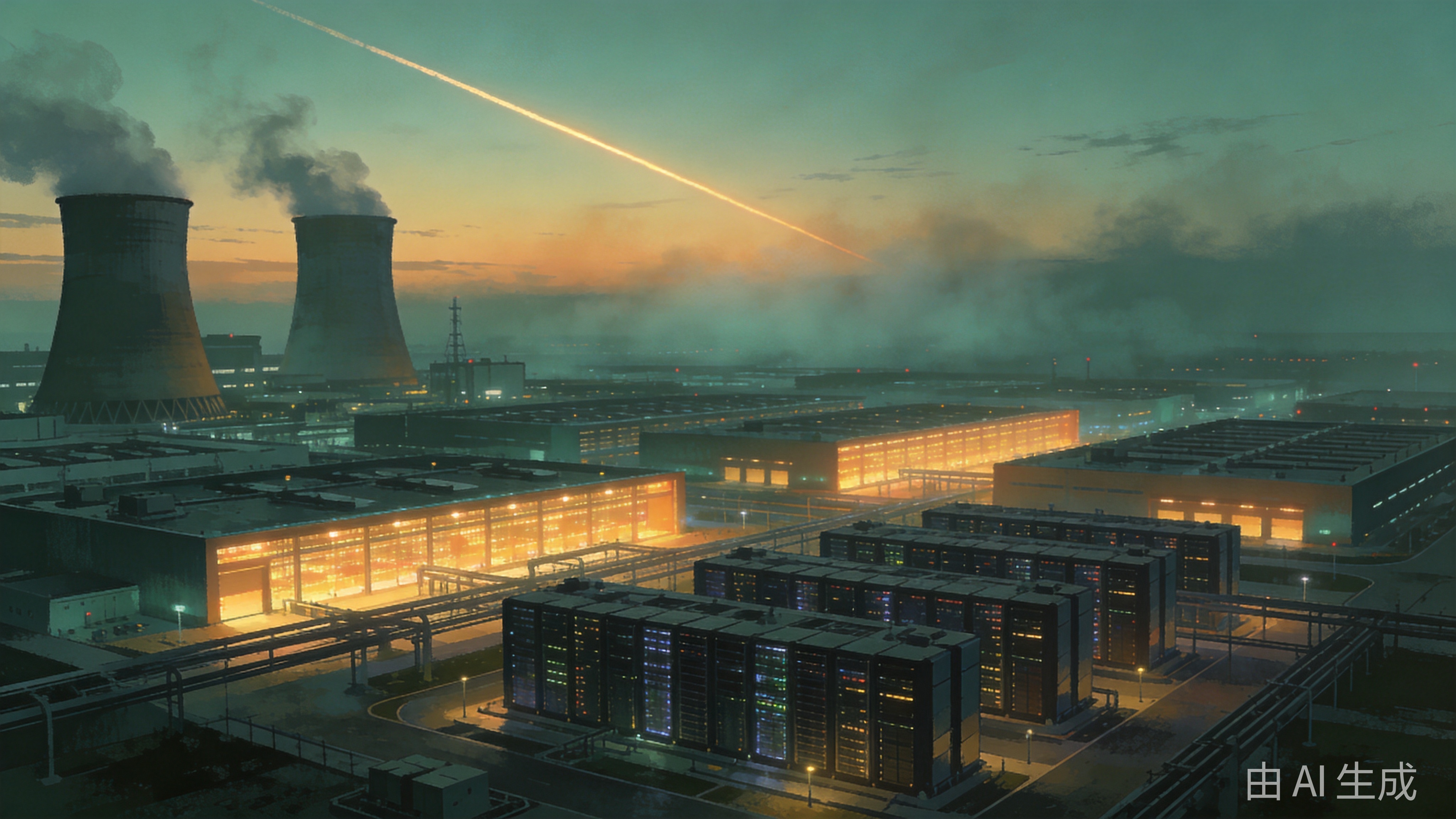
Solidigm abandoned its US IPO on October 23, 2026 while OpenAI moved to close a $30 billion round at a $1.25 trillion pre-money valuation, exposing a sharply discriminating capital market.
Two Decisions in One Week, Pointing the Same Way
On October 23, 2026, SK hynix published a newsroom release announcing that Solidigm, its United States NAND flash and solid-state drive subsidiary, has discontinued the review of a potential pre-IPO and IPO. The same day, Chinese financial media reported that OpenAI is close to completing a private funding round of up to US$30 billion at a pre-money valuation of US$1.25 trillion (source: Eastmoney, reporting from Cailianshe, October 23, 2026). The two headlines look contradictory at first glance. Read together, they describe a single market: private capital for AI infrastructure is still abundant, but the public market has become expensive, fragile and politically unreliable.
What Solidigm Actually Stopped
Solidigm's own statement is precise about the scope of the decision. The release states that Solidigm "will halt its review of potential pre-IPO and IPO options" and that the decision "does not reflect any change in Solidigm's growth prospects or investment needs." The reason given is explicitly financial and short-horizon: "in light of recent capital market conditions and share price trends," the review was no longer the most favourable option for SK hynix and its existing shareholders (source: SK hynix Newsroom, FACT release, October 23, 2026).
The strategic rationale for the IPO had been documented for months. Solidigm, headquartered in Rancho Cordova, California, operates the NAND flash and SSD business that SK hynix uses to address AI-era memory demand. Its existing production capacity was described as limited relative to rising demand, so additional U.S. production facilities require funding. An IPO would have raised external capital, increased consolidated cash flow, and freed balance-sheet capacity for dividends, buybacks and cancellations for the parent — and, on the company's own reasoning, allowed the market to price Solidigm's growth separately from SK hynix's corporate value.
None of that logic has changed. The capital structure has. Chinese financial media reported that SK hynix's own share price fell 32.59 percent over the preceding month amid a broader correction in semiconductor equities (source: Sina Finance, reporting from Cailianshe, October 23, 2026). Floating a subsidiary into a market that has just de-rated its sector is the wrong moment to ask investors to pay a growth multiple. SK hynix says it will keep assessing "the timing, scale and financing methods" of investment and continue exploring alternatives for supporting Solidigm's expansion and shareholder value.
OpenAI's Race Against Its Own Rival
On the other side of the market, the AI labs are competing for the same pool of private money. The Eastmoney report describes a round of up to US$30 billion at a US$1.25 trillion pre-money valuation, led jointly by UAE investors and the investment firm Coatue, with the pre-money figure excluding the new capital itself (source: Eastmoney, reporting from Cailianshe, October 23, 2026). The report also notes that OpenAI told investors on Thursday that it plans to complete signing before the end of the following week, while the final size remained under discussion.
The strategic reason for moving now is a calendar. Anthropic is preparing for a November IPO and is reported to be seeking a valuation of up to US$2 trillion, though some investors consider roughly US$1.5 trillion more realistic (source: Eastmoney, reporting from Cailianshe, October 23, 2026). OpenAI's chief financial officer Sarah Friar has told employees the company may list in 2027, and OpenAI confidentially filed an IPO registration statement with the U.S. Securities and Exchange Commission in June 2026 without announcing a date. Securing private commitments before Anthropic's disclosure sets a private market reference point, rather than letting two trillion-dollar valuations be compared directly in public.
For scale, the new round follows a US$122 billion raise completed in March 2026 at a valuation of US$852 billion (source: Eastmoney, reporting from Cailianshe, October 23, 2026). The step-up is large. So is the compute bill: OpenAI is simultaneously negotiating a commercial agreement with the UAE for additional computing capacity, meaning the financing and the infrastructure commitments are linked rather than separable.
The Real Signal: Scrutiny Has Arrived
The common thread across both stories is not enthusiasm or its absence, but scrutiny. The same Eastmoney analysis names the three forces making AI funding harder: rising interest rates, volatility in technology stocks, and close attention from investors to infrastructure spending. That last clause is the important one. Capital markets no longer treat compute build-out as a self-justifying expense. A data centre that costs more than the revenue it serves is now a question a portfolio manager is expected to ask out loud.
There is a structural asymmetry worth naming. A company that needs to raise money for infrastructure must ask investors to accept the capital intensity of the business. A company that has already raised the money can simply keep building. OpenAI's ability to close a US$30 billion round quickly, while Solidigm cannot float an IPO at all, is not a contradiction of a cooling market; it is what a cooling market looks like when one participant has already raised most of the money it needs and another is still trying to get started.
The near-term consequence is a shift in where AI capacity gets financed. The private round remains the primary channel, and the private round is increasingly supplied by a narrower set of very large, patient balance sheets — sovereign-linked investors and growth funds such as Coatue in OpenAI's case. Public markets still work for established compounders with operating cash flow, as SK hynix's position shows, but a subsidiary valued on a growth multiple, at the wrong moment in a sector correction, can be left waiting.
Both announcements remain incomplete in ways that matter. OpenAI's round was still being negotiated on October 23, and neither the final size nor the final valuation was fixed. Solidigm's fab funding needs are unchanged, and the capital has not yet been raised. The honest reading is not that AI infrastructure funding has stopped, nor that it has accelerated, but that the market is now discriminating sharply between companies that can finance compute with retained earnings or committed private money and companies that still need public markets to open for them.